

Naturally Ageless
Natural · Skin · Tips
Why 100,000 Women Over 45 Are Quietly Ditching Botox and Retinol for a Jar of Beef Fat
How I got the crêpey skin off my face and neck at 51 - without ever having had a skincare routine - using something a 79-year-old keeps in a reused sour cream tub.
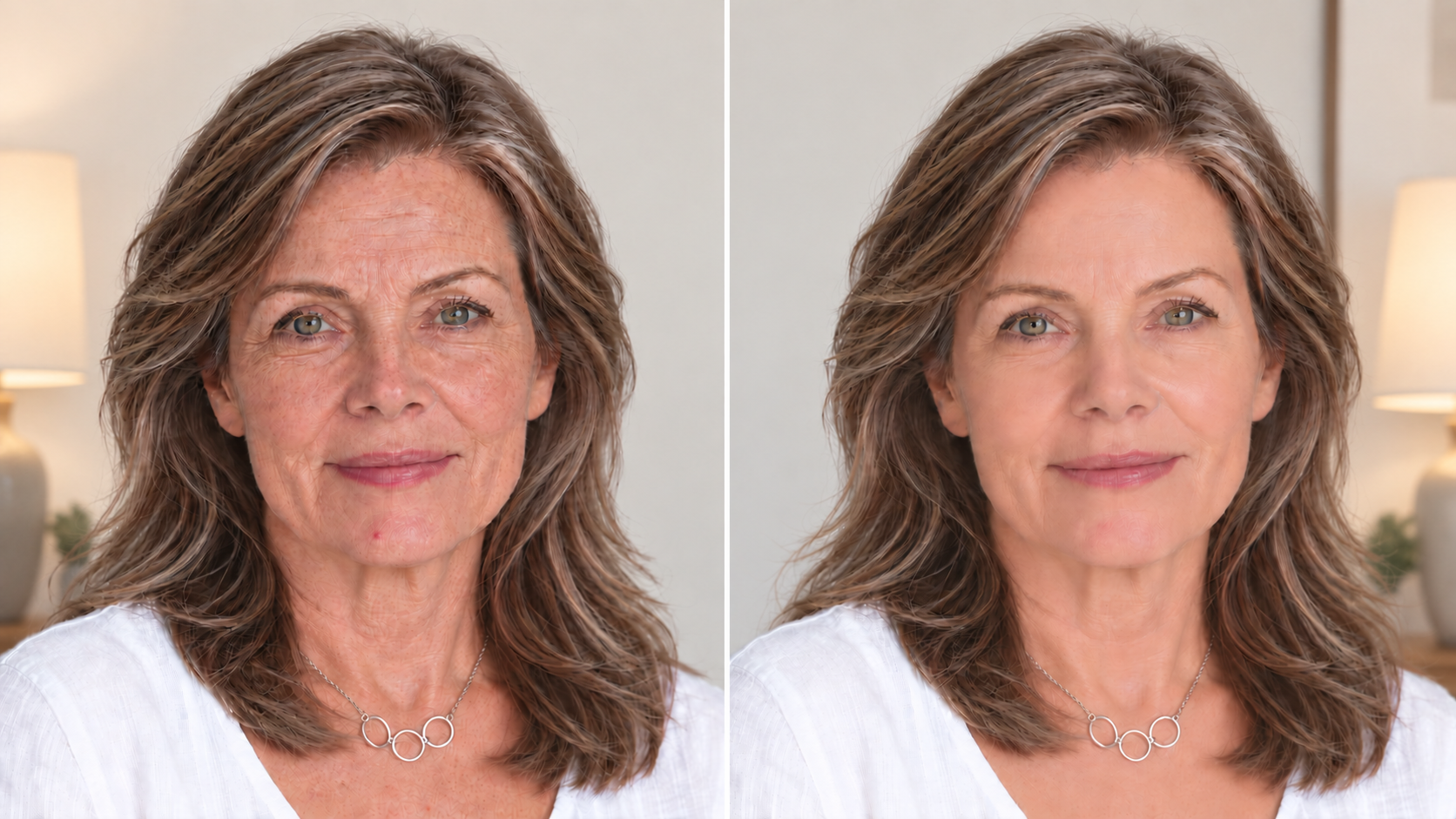
There's a version of the wrinkle story that every woman over 45 has been handed.
It sounds like science.
Most of it isn't.
It goes: wrinkles are lost collagen.
So you need a retinoid to force your skin into making more.
And if the cream isn't cutting it, you need a needle to freeze the muscle so the crease can't deepen.
And if that isn't working, well — you weren't consistent.
If you're peeling, that's purging, push through.
If you still look tired in photographs, book another session.
It's a very good story I must admit.
It just doesn't explain what's actually happening to your face.
You've already done some version of what you were told.
The retinol at 35, or 38, or whenever the first article got to you.
A serum that cost more than that week's groceries.
And the line beside your mouth is deeper than it was two years ago anyway.
So you escalated.
Stronger cream.
A peel, because dead skin makes you look older.
Or you opened an internet tab to search for Botox treatments and closed it again.
Or you didn't close it…
So you probably started wondering whether the problem was you.
That you'd left it too late, or hadn't been strict enough, or just have bad skin and always did.
That's the conclusion they need you to reach.
It's the only one that keeps you buying.
Well, It's also just wrong.
And not to brag, but I'm the living proof for this statement.
Honestly, you should be a little annoyed with me.
Not because I found a way to look so young, people mistake me for my daughter (this really happened once).
More because of how I achieved it.
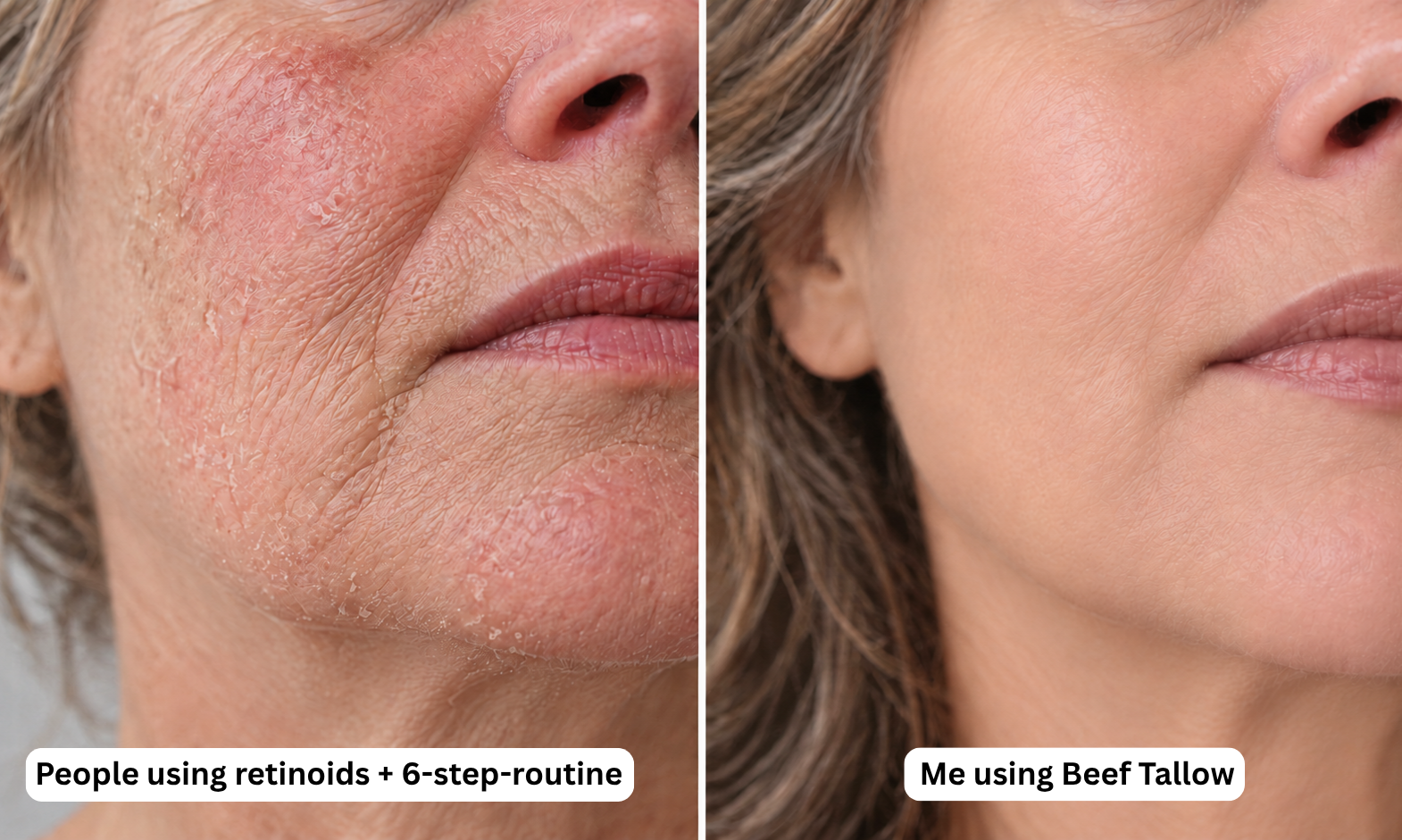
I have a confession to make
I've never had a skincare routine.
Not a bad one.
None.
I'm 51 now, and until this year the only thing that touched my face was whatever bar soap happened to be in the shower.
I've got the trench between the brows, the parentheses around the mouth, that dry slack along the jaw, and a neck I stopped letting anyone photograph from the side a long time ago.
So if the story you were sold were true, I'd be the cautionary tale and you'd be the after photo.
I mean you probably did "the homework".
I didn't.
And to be honest, I never actually cared about the wrinkles.
Of course I didn't like them but frankly I was too lazy for the 10 step routine…
At least until we were clearing out the spare room and found the old family albums.
He was going through the one from Portugal — 2011, so I'd have been 36 — and he said it without looking up, completely pleased with himself:
"God, look at you. You were so glowy back then."
He meant it kindly.
At least that's what I hope.
I carried the album into the hall and held that photo up next to my face in the mirror, which was a stupid thing to do.
Then I did it again in the bathroom, where the light is worse.
I didn't tell him about it.
But something changed.
For the first time I started doing research.
I read about collagen this, percentages that, women in comment sections arguing with each other about the order to put them on in.
After a week of that I gave up and did the sensible thing.
I booked a dermatologist.
The first one of my life, and the soonest they could see me was the following Thursday.
I had no idea what I was going to ask for.
I was going to let them tell me.
That Sunday, we had dinner with my daughter's fiancé's family for the first time.
She turned out to be the groom's grandmother
It was at his parents' house and there were a lot of them, and I was doing the thing you do at those dinners: repeating names in my head, trying to look relaxed about it.
Then a woman came in late, straight from the car with a covered pan and no makeup on.
I put my hand out and said something about how lovely it was to finally meet his mother.
She thought that was very funny.
So did everybody else.
Her name is Irena.
She's his grandmother, and she's 79.
Her skin was tight the way young skin is tight like there was still something underneath holding it up.
Her cheeks looked fed.
I went looking for concealer under her eyes and there wasn't any.
Her neck read as a continuation of her jaw instead of a separate situation.
And when she smiled, the smile went into the skin and the skin came back out of it.
No fine webbing at the temples.
None of that powdery crêpe you know from your own mirror.
I'm 51.
She's 79.
My skin was worse than hers, and it wasn't even close.
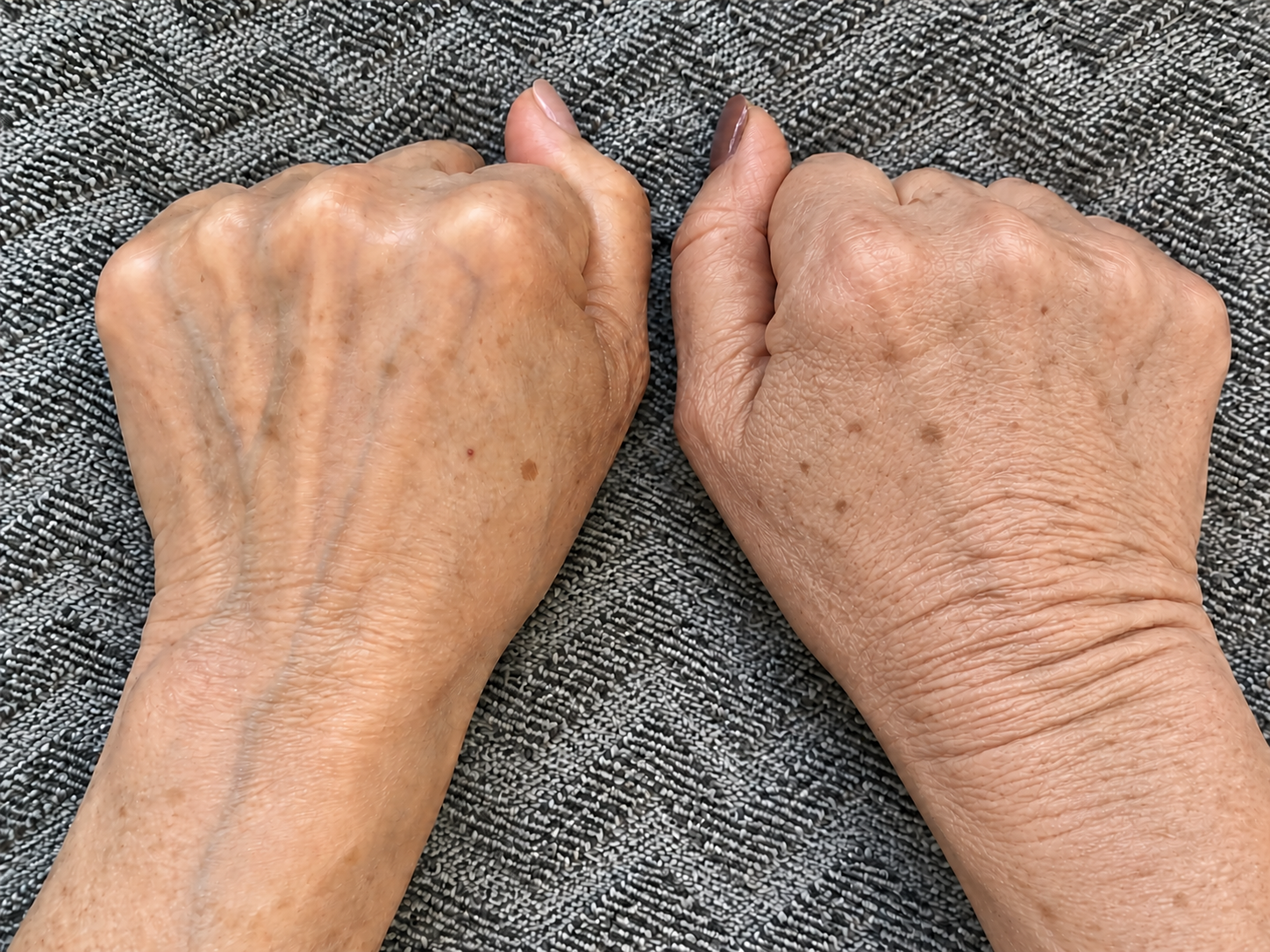
Even her hands looked younger.
I asked her what she used.
Too fast, too loud, and straight over the top of somebody else's sentence.
She laughed at me.
Not mysteriously — a bit meanly, if I'm honest.
"I'll tell you," she said. "But trust me, nobody takes it serious. That's why nobody has skin like mine."
She wasn't in any hurry about it either.
She served herself potatoes first.
Where she grew up they had meat once a week.
And because they had nothing, they kept everything.
After her mother cooked the beef there was fat left sitting in the pan, and it went white and hard as it cooled, and it lived in a tube on the shelf for the potatoes and the bread and whatever else needed it.
"We're vain," she said. "Two girls. Of course we're vain."
So one January her sister took a little of that beef fat on her finger and put it on her face.
"Everybody was disgusted," she said. "My mother even told her to wash it off."
"Then it's February. Her face is fine. The rest of us are cracked."
And then that was simply what they did.
Initially they didnt even think about the aging aspect of it.
I mean, they were young back then…
Until at one point every woman in the house dipped into it.
Her mother started, then the aunts and even grandmas.
And that's when they noticed.
Her grandmother didn't have the face the other women her age had.
Same village, same weather, same work, same food.
But the skin on her eyes hadn't gone to tissue paper, her cheeks hadn't fallen in, and when she smiled it went into her face and came back out again.
Irena said it took them a couple of years to stop putting it down to luck.
That's when they started fiddling with it.
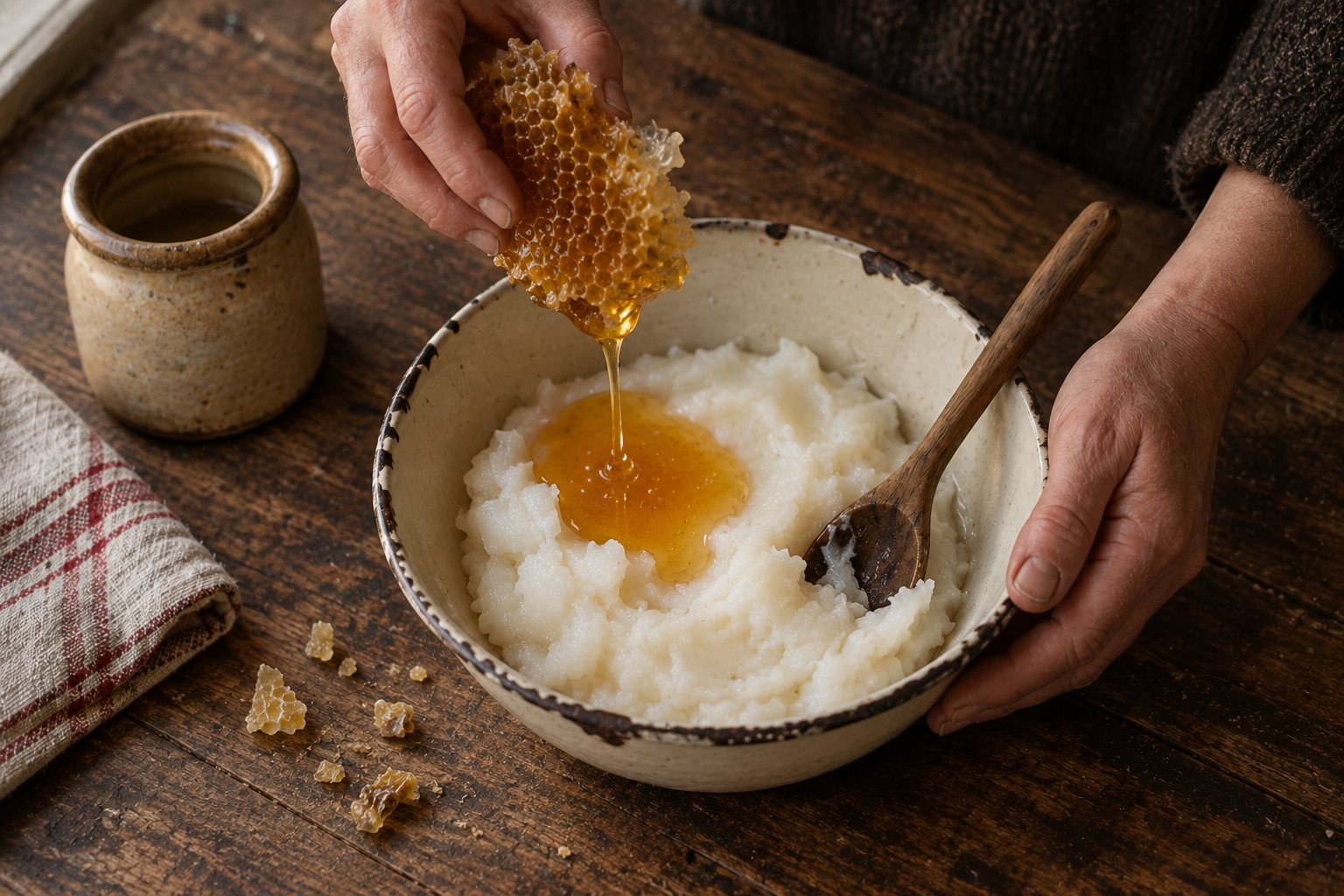
The honey came first, and in hindsight it's the obvious one — every mother in that village put honey on a burn, on a split lip, on anything that wouldn't close over.
So it only make sense to try it in the face too.
"It's better with the honey," she said. "Softer."
That was the end of it.
She was about thirty.
She hasn't changed a thing in fifty years.
I asked how long she'd been using it.
She didn't have to think very hard.
"Since I'm nine."
I'll be honest about my reaction, because I suspect it'll be yours.
Beef fat.
On your face.
The grey-white stuff that goes solid in the roasting tin, that you scrape into the bin with a bit of kitchen roll because it'll block the sink otherwise.
Everything in me went no.
"What are you so grossed out about? I put on the skin what I would eat — better than all those chemicals nowadays…"
Then she proposed an idea.
I'll cancel my dermatologist appointment and try it for the next 3 months.
I said I'll first need to do some research.
I mean beef fat couldn't be some miracle, there has to be a reason why it's working.
So I went and read.
Start one level below the wrinkle
The outer layer of your skin is a barrier.
Cells packed together in a lattice, with fats filling every gap between them.
Its entire job is to hold your water in and keep everything else out.
So it's basically like a roof.
Protect what's important, keep out what's not wanted.
It's also easier to damage than anyone tells you.
Hot water pulls those fats out.
So does soap, wind, cold, sun, and every acid, scrub, peel and retinoid you have ever put on your face.
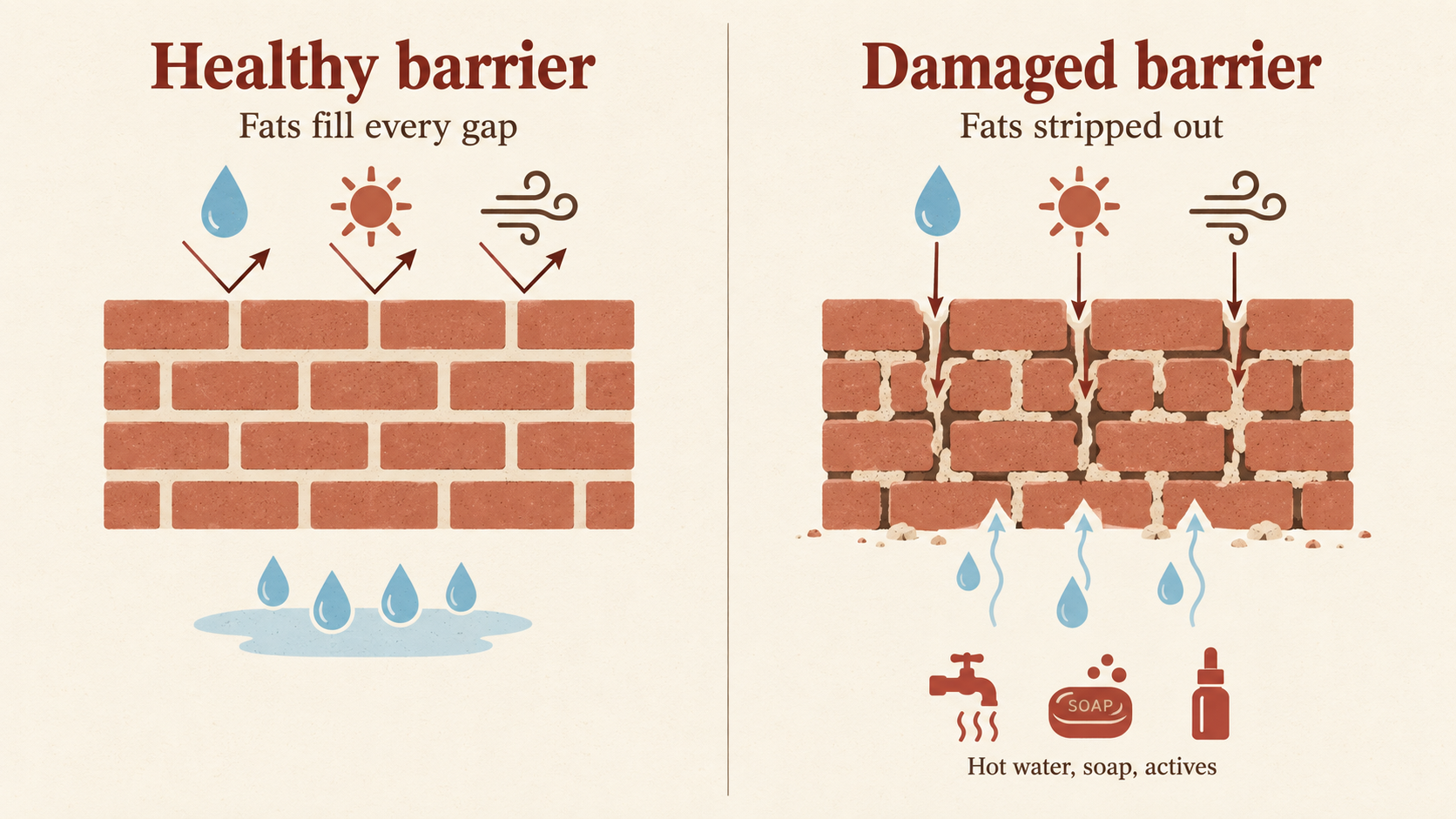
And when the roof is damaged, it doesn't announce itself as damage.
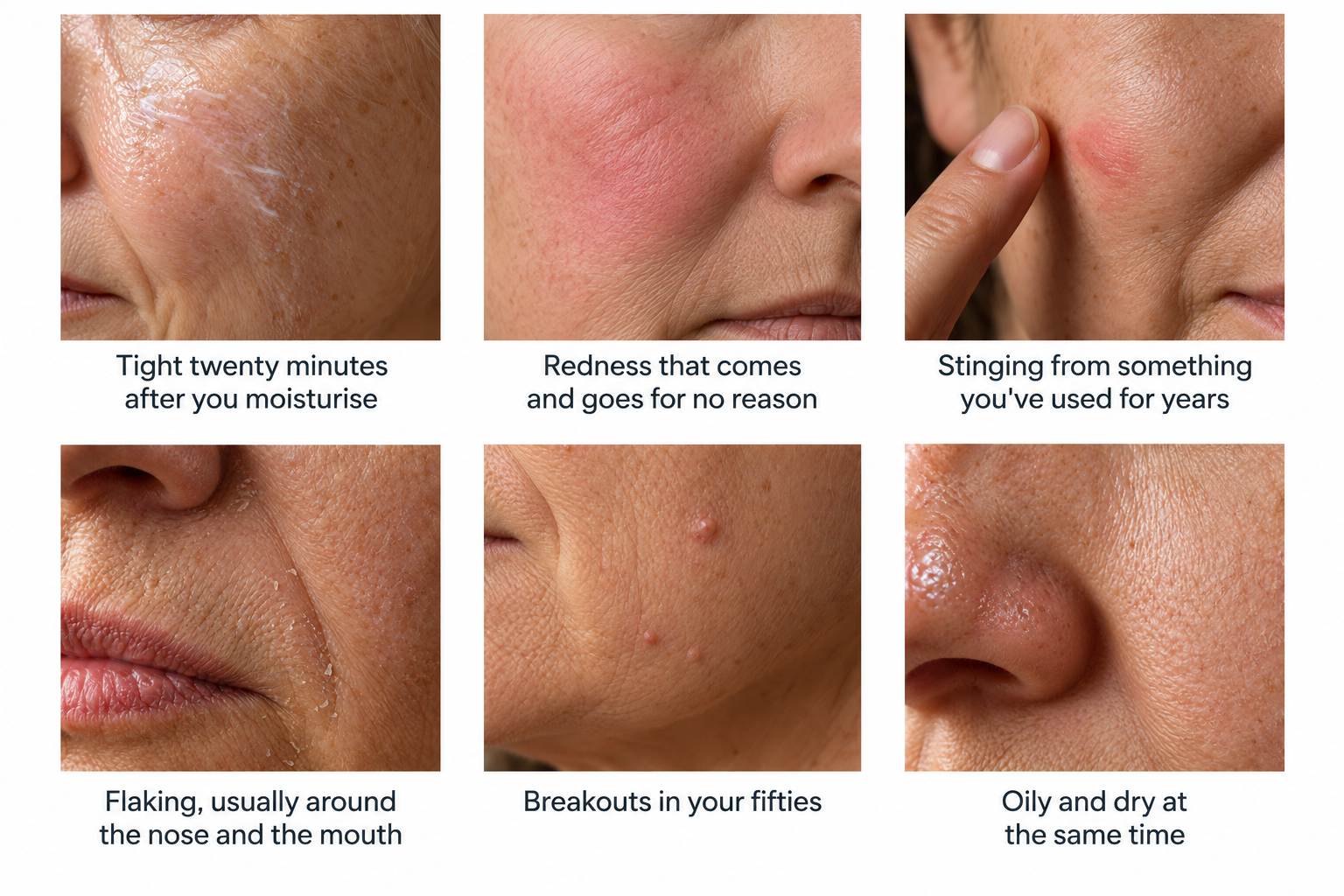
It shows up as a list:
- Skin that feels tight twenty minutes after you moisturise
- Redness that comes and goes for no reason you can name
- Stinging when you put on something you've used for years
- Flaking, usually around the nose and the mouth
- Breakouts in your fifties, in places you didn't get them at twenty
- Oily and dry at the same time
- Products that "stopped working"
Recognise any of that?
Now go back and look at what you were told those things meant.
Purging.
Adjusting.
Your skin type.
Sensitive skin, combination skin, skin that reacts to everything.
None of those are types.
And by the way "purging" isn't even a clinical word — nobody in medicine uses it.
It's a consumer term, and what it describes is an irritated, inflamed, injured face reclassified as evidence that something is working.
Here's the part that should genuinely annoy you:
the women with the longest, most disciplined routines are the most likely to be walking around with a damaged barrier.
Nearly every step in a serious routine is mildly stripping.
Do six of them a night for a decade and the roof never once gets a chance to close.
Most of them have no idea.
They think this is just how their face is.
And the wrinkles themselves are part of a damaged skin barrier, which is the bit nobody mentions at all.
A barrier that's holding its water is plump and flexible.
Let the water out and the surface goes rough and stiff, and light catches in every crease instead of bouncing off it.
It's why it looks better an hour after a bath.
Nothing changed underneath.
The surface just held its water for an hour.
So a broken barrier hands you the wrinkle three separate ways.
It makes the lines you have today look deeper than they are.
It turns expressions into set folds faster than they should ever set.
And underneath both of those, quietly, it's running the third and most severe damage.
What happens underneath a damaged barrier
The thing that normally holds your skin taut is a protein called elastin.
Think of it as tiny springs, woven through your skin in a net.
They're what pulls your face flat again after every expression you've ever made.
Pinch the back of your hand and let go.
That's elastin, and at 55 it takes visibly longer than it did at 25.
Those springs only work in wet tissue.
Elastin doesn't sit in your face on its own.
It's embedded in a matrix, and that matrix is either soft and full of water, or it's dry and stiff.
A spring set into something supple retracts.
The identical spring set into something rigid can't — it hasn't broken, it hasn't weakened, it simply can't pull against what's holding it.
And the water in that tissue is the water your barrier is supposed to be keeping in.
So when the barrier is damaged through over doing it with skincare actives, cleansing, uv etc.
water leaves and the tissue goes stiff.
The springs stop retracting and your face stops going back to where it was.
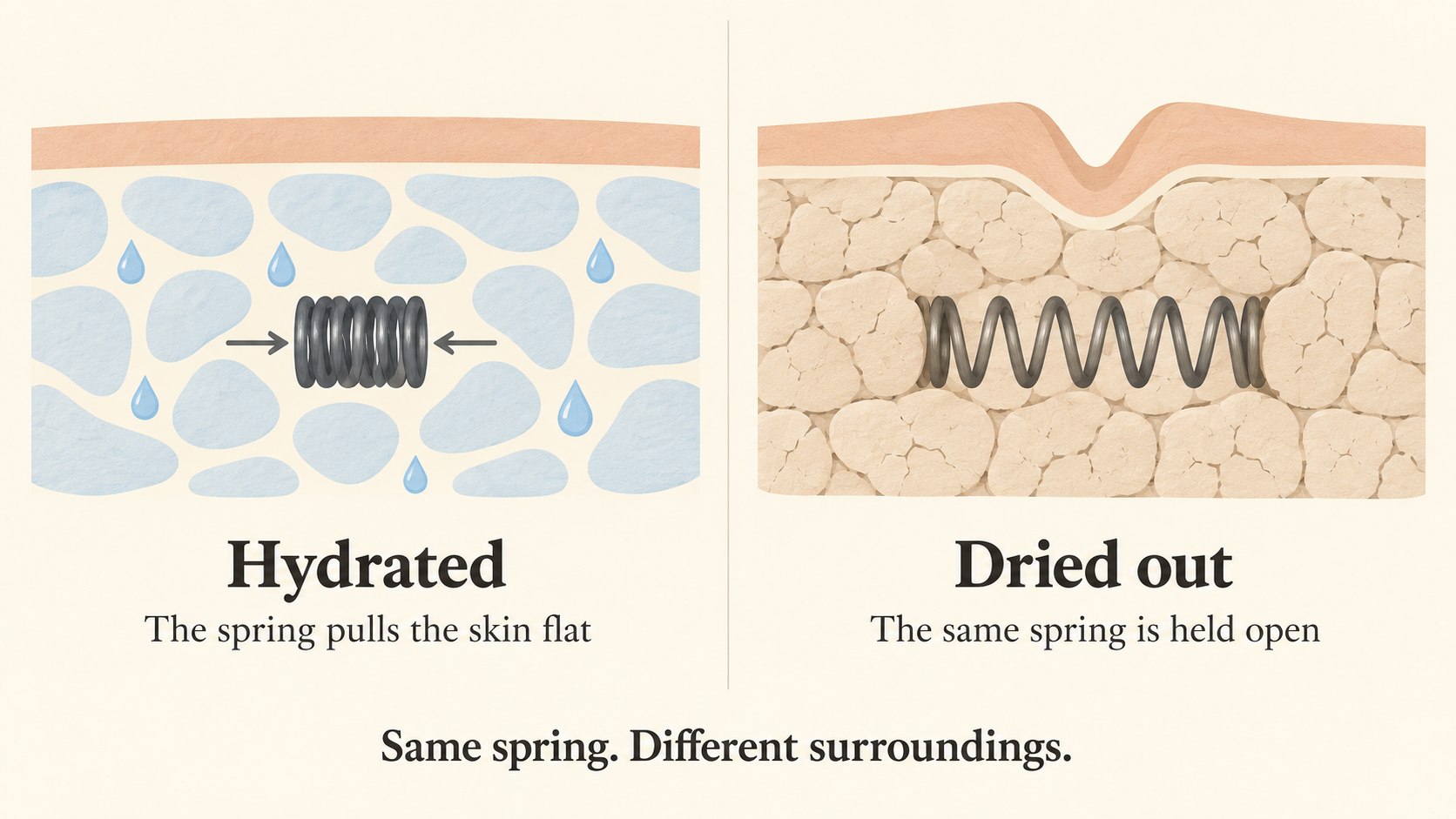
It's why you look better an hour after a bath and you assumed it was the lighting.
Nothing was rebuilt in that hour.
The tissue held water for a while and the springs were briefly allowed to work.
Now for the part that makes this urgent rather than merely annoying.
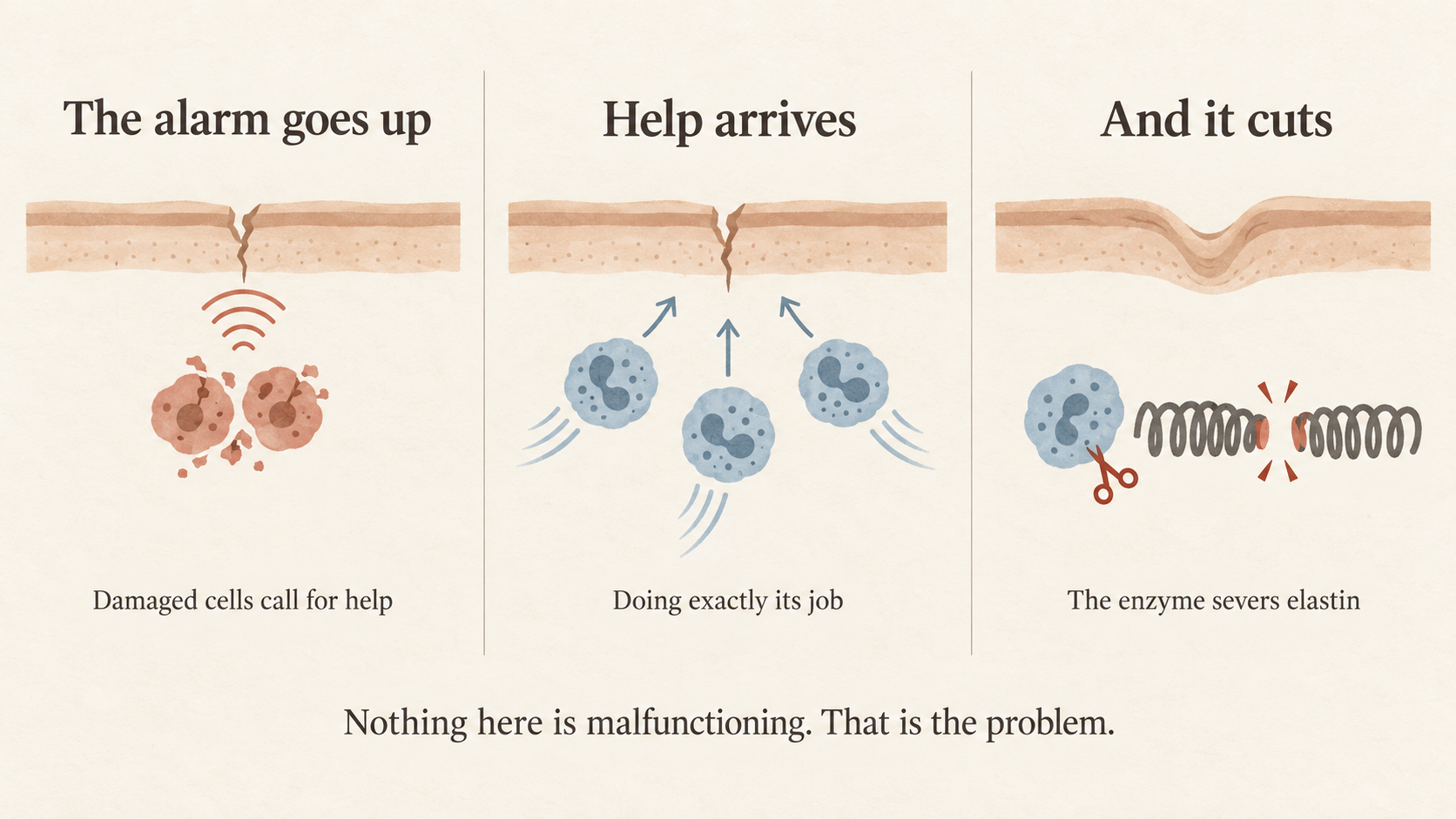
Damaged skin cells release alarm compounds, and those alarms call in your immune system:
Neutrophils, the same first responders that would show up to a cut on your hand.
That's your body working exactly as designed.
A broken roof should call for help.
The problem is what the help arrives carrying.
Neutrophils bring an enzyme called neutrophil elastase, and it does precisely what the name suggests.
It cuts elastin.
Elastin is a protein, and in your skin it's spun into fibres
They're the reason skin can be pulled and let go and end up back exactly where it started.
Pinch the back of your hand and release it.
Whatever happens in the next second is elastin, and if you're 55 it takes visibly longer than it did at 25.
And elastin is the one thing you can't get back.
Collagen is scaffolding, and you keep producing it your whole life.
The rate slows down as you get older, but the machinery never shuts off.
The elastin sitting in your cheek right now is essentially the elastin you had at twenty.
Just less.
And without enough elastin, your face sags.
The skin stops pulling itself back up, so it sits lower than it used to, and the creases that used to smooth themselves out just stay where they are.
Which is what a wrinkle actually is.
A fold that stopped coming back out.
It's your jaw going soft, it's your neck, and it's the line beside your mouth and on your forehead.
Once its Elastin is cut, nothing replaces it.
Not a cream, not a laser, not a needle.
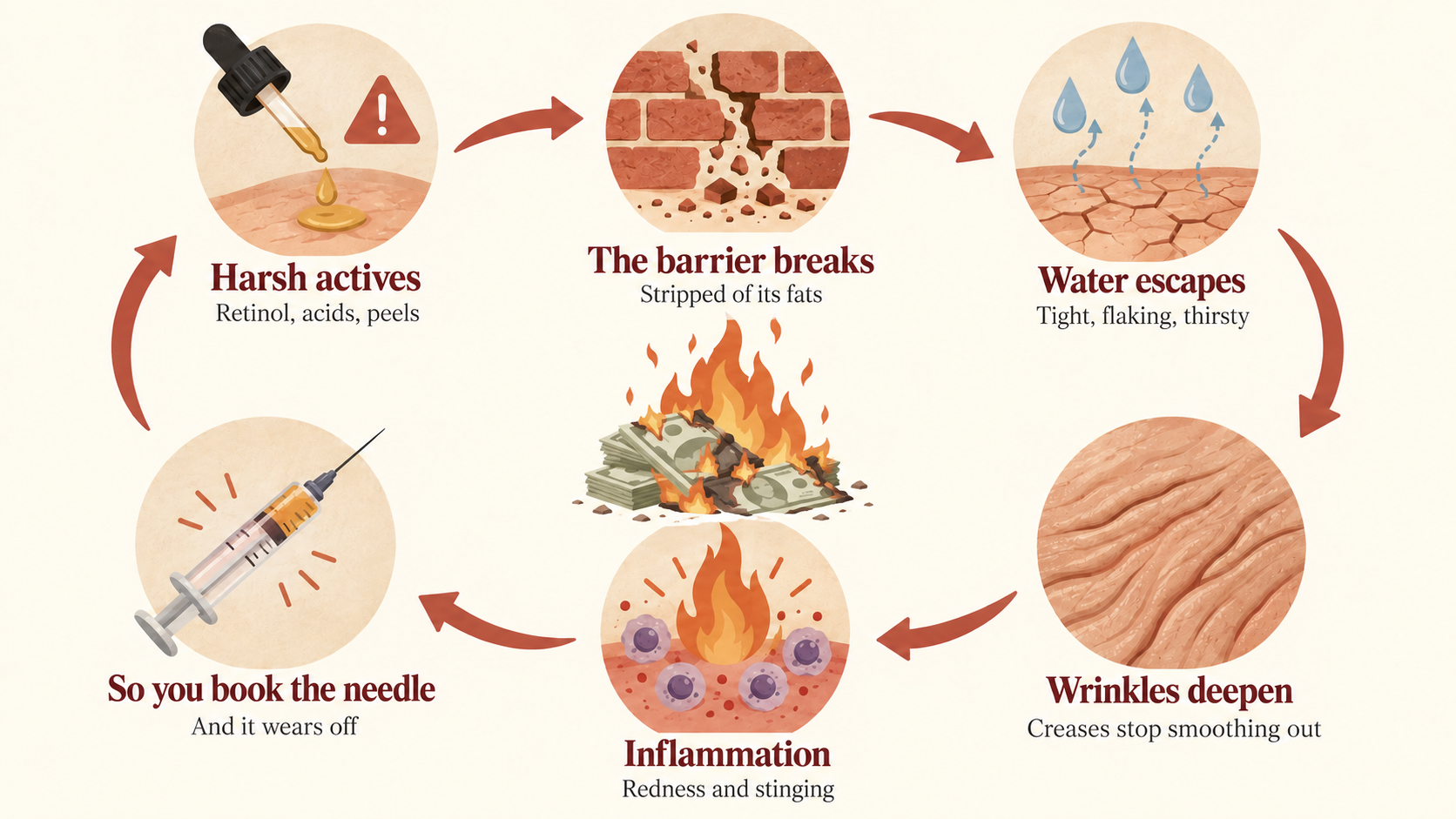
So the sequence runs: broken barrier, alarm, immune cells, elastase, cut elastin, skin that no longer springs back.
Now hold that sequence in your head and go and look at what's in your bathroom cabinet.
The bottle you were told to be consistent with
A retinoid works by accelerating turnover at the surface.
That is the same sentence as: it disrupts the barrier.
It isn't a side effect, it's the mechanism.
The redness and the flaking and the stinging are the roof coming off — deliberately — and you were told to push through it.
Push through it for how long?
You were told twelve weeks.
Plenty of women are still pushing twelve years later, because the result never quite arrived and the answer was always a higher percentage.
So run that through the sequence you just read.
Open the roof.
Raise the alarm.
Bring in the cells.
Bring in the enzyme.
Lose a little more of the one fibre you cannot replace.
Wake up, notice it still isn't working, and go and buy something stronger.
And the needle doesn't go near any of it
If you've never had it, this still concerns you.
It's the next thing you'll be offered when the cream stops delivering, and it'll be framed like a graduation.
Look at where it acts.
Botox relaxes the muscle underneath so the skin on top can't fold.
It does nothing to the barrier, nothing to the alarm, nothing to the enzyme.
Every step of that sequence carries on underneath it, uninterrupted, for the entire eleven weeks you've paid for.
And then the arithmetic.
A few hundred a session, three or four sessions a year, more if they do the crow's feet while they're in there.
By month four the muscle wakes up and the crease is exactly where you left it, because nothing repaired the skin.
So you rebook.
A neurotoxin sold like a facial, on a subscription — and a version that lasted would be a terrible business.
Plenty of women also end up with a forehead that can't register surprise.
You wanted to look like you'd had a full night's sleep.
What you can get is a face that can't lift its own eyebrows.
None of it puts oil back in your skin.
None of it slows crêpe.
None of it does a single thing for your neck.
Botox is a muscle drug.
Your wrinkle, at the root of it, isn't a muscle problem.
Which is why the woman with no routine won
I had sun damage and neglect and real, deep wrinkles.
What I didn't have, until 51, was a standing nightly invitation to that crew.
I was lucky in the stupidest possible way: I was lazy.
Then I got lucky twice, and met Irena four days before that appointment.
She never said the word "elastase."
She said beef fat.
Roof shut, alarms quiet, the elastin she was born with still sitting there doing its job at 79.
That's the unsentimental version of the whole Eastern European grandmother thing.
It isn't folklore, genetics, or wine.
It's the woman who kept the tube.
They fixed the roof because a cow was cheaper than a department store.
They never had to solve the second half, because they never started it.
One job, and nature already solved it.
Once you see the sequence, what to do about it stops being complicated.
It also stops being another acid.
There's one thing wrong with your face.
The barrier is broken, the tissue underneath it is dry, and the springs in it can't pull.
And your immune system, arriving to defend the damage, cuts through what elastin you have left on the way in.
Fix the one thing — your barrier — and all of it stops.
Everything I read came back to the same four ingredients and every one of them is something you could have already found in a kitchen a hundred years ago:
tallow, beeswax, honey and frankincense.
Irena had been using two of the three since she was nine.
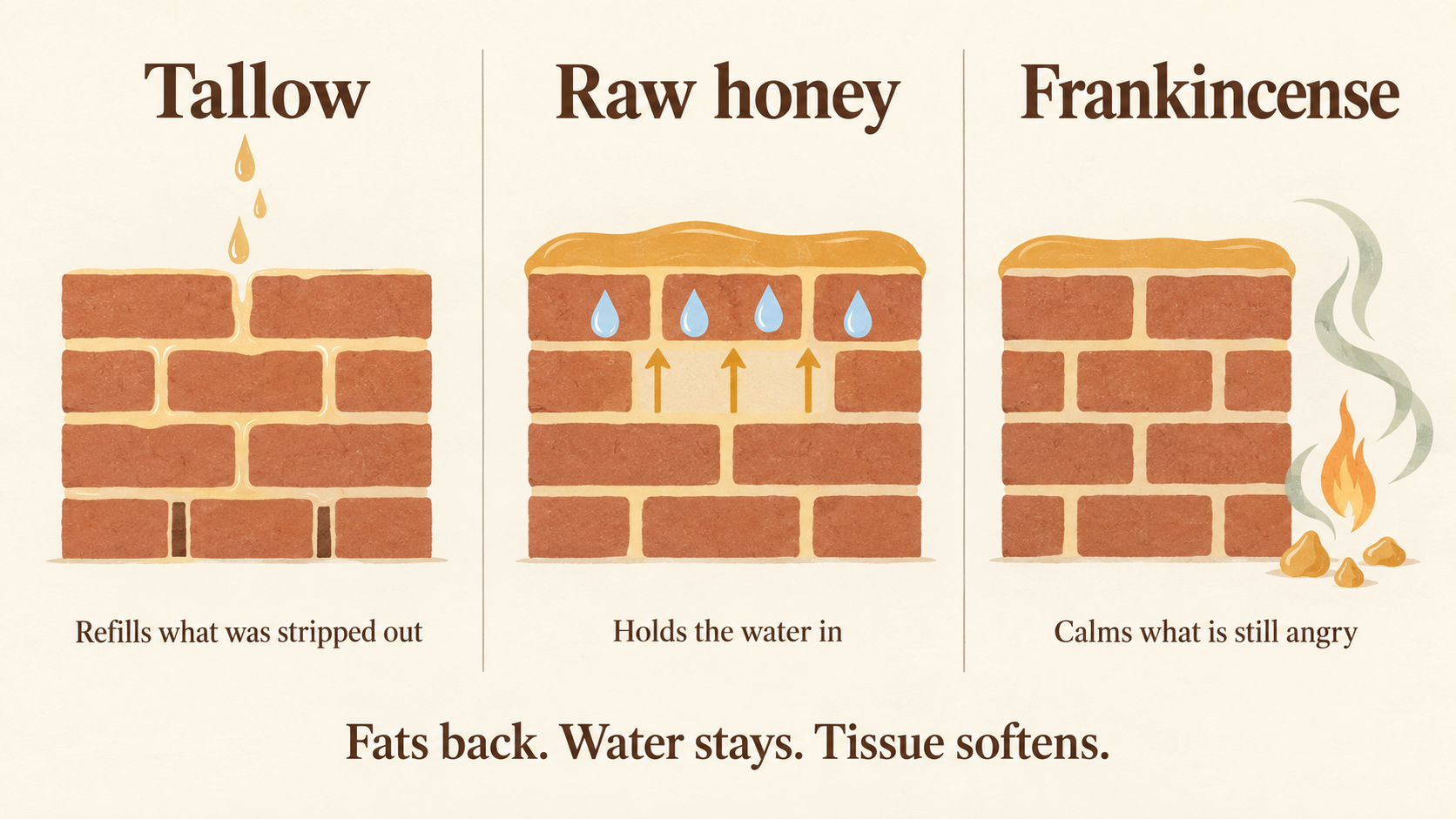
Tallow does the repair.
The fats that hold your barrier together have been pulled out of it by hot water, soap, weather and every active you've ever used.
Grass-fed tallow is remarkably close in lipid composition to our skin's own natural fats, which is why it sinks in rather than simply sitting on top.
You aren't coating your skin, you're restocking it.
Honey holds the water at the surface while those fats go back in, and it's antibacterial while it does it.
The word doing the work here is raw.
Honey's antibacterial action comes from enzymes the bees put in it.
And heating and filtering destroys them, which is why supermarket honey is essentially syrup.
Irena's came from a farm stand, unheated and cloudy, and that turns out to have been the right honey rather than the cheap one.
Frankincense settles the inflammation that's already there.
This is the one she never needed, because her barrier was never open in the first place.
Yours has been open most nights for years, and skin that's been irritated that long doesn't go quiet the moment you put fat on it — it stays inflamed, and inflamed skin holds water badly and stays stiff.
The resin contains a group of compounds that calm that down, which lets the tissue soften faster than it would on its own.
What I ended up using
You could make this yourself.
Irena does, and she'd be thrilled if you did — it means buying beef fat from a butcher and melting it down on your stove with wax, and if that's something you'll genuinely do, go and do it.
I was never going to.
What I did do is work out what separates a good one from a bad one, because there is a great deal of tallow for sale now and most of it doesn't belong anywhere near your face.
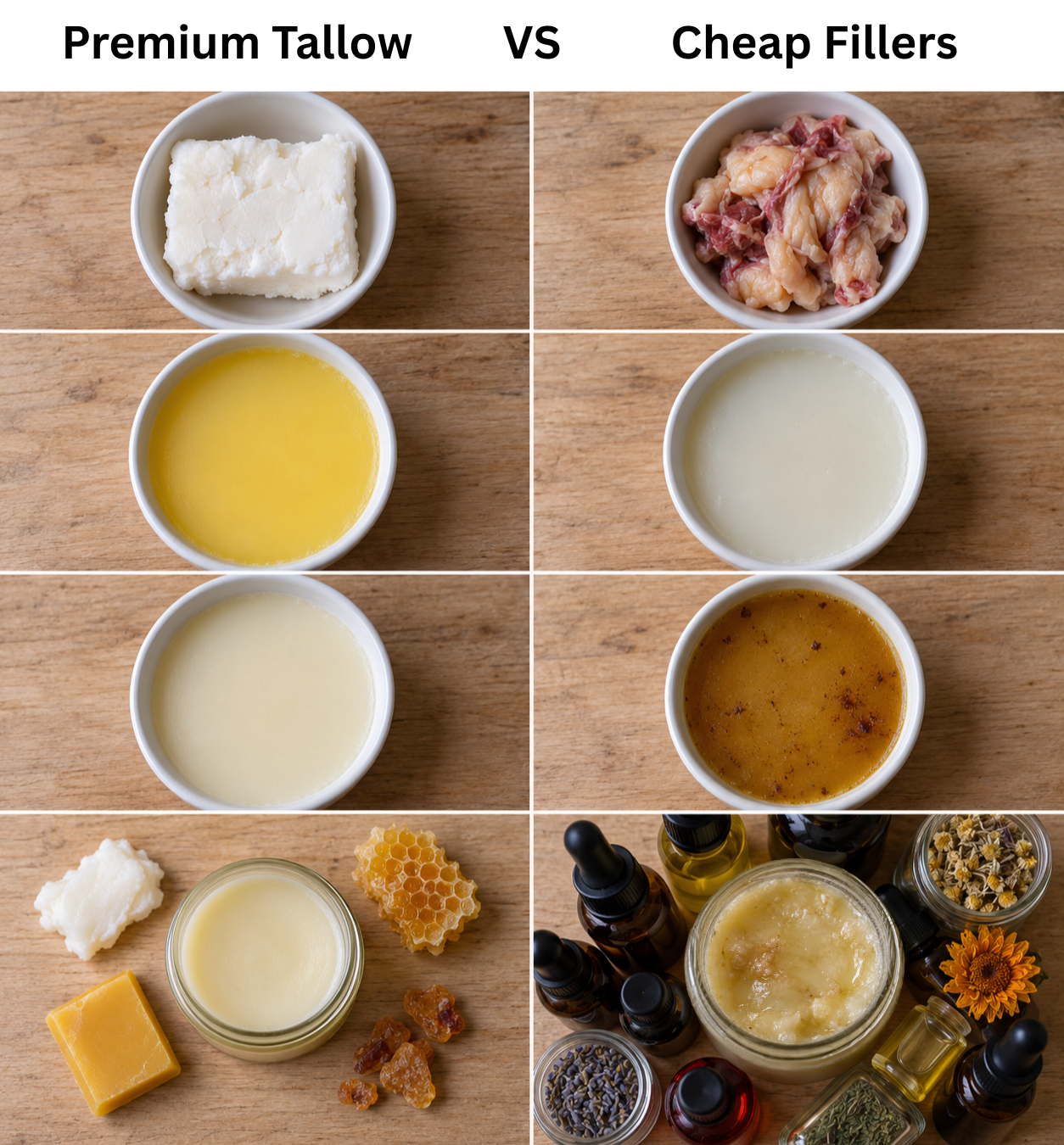
Suet, not trim.
Suet is the hard fat from around the kidneys.
It renders firmer, cleaner and far more stable than the soft trimmings cheap tallow is made from, and it's most of the difference between a balm that smells like almost nothing and a balm that smells like a Sunday roast.
Grass-fed, and it isn't just a label here.
An animal's fat carries what the animal ate.
Pasture-raised fat comes out higher in vitamins A, D, E and K2, with a better fatty acid profile than grain-fed.
Same process, different raw material, and you can see it in the colour.
Rendered low and slow.
Push the heat and you scorch it.
That's where the beefy smell and the darker colour come from, and it's partly oxidised by the time it reaches you.
Nothing else in it.
No cheaper oils cut in to stretch the batch.
And no fragrance — added fragrance is one of the most common barrier irritants there is, which makes a scented barrier balm a fairly stupid object.
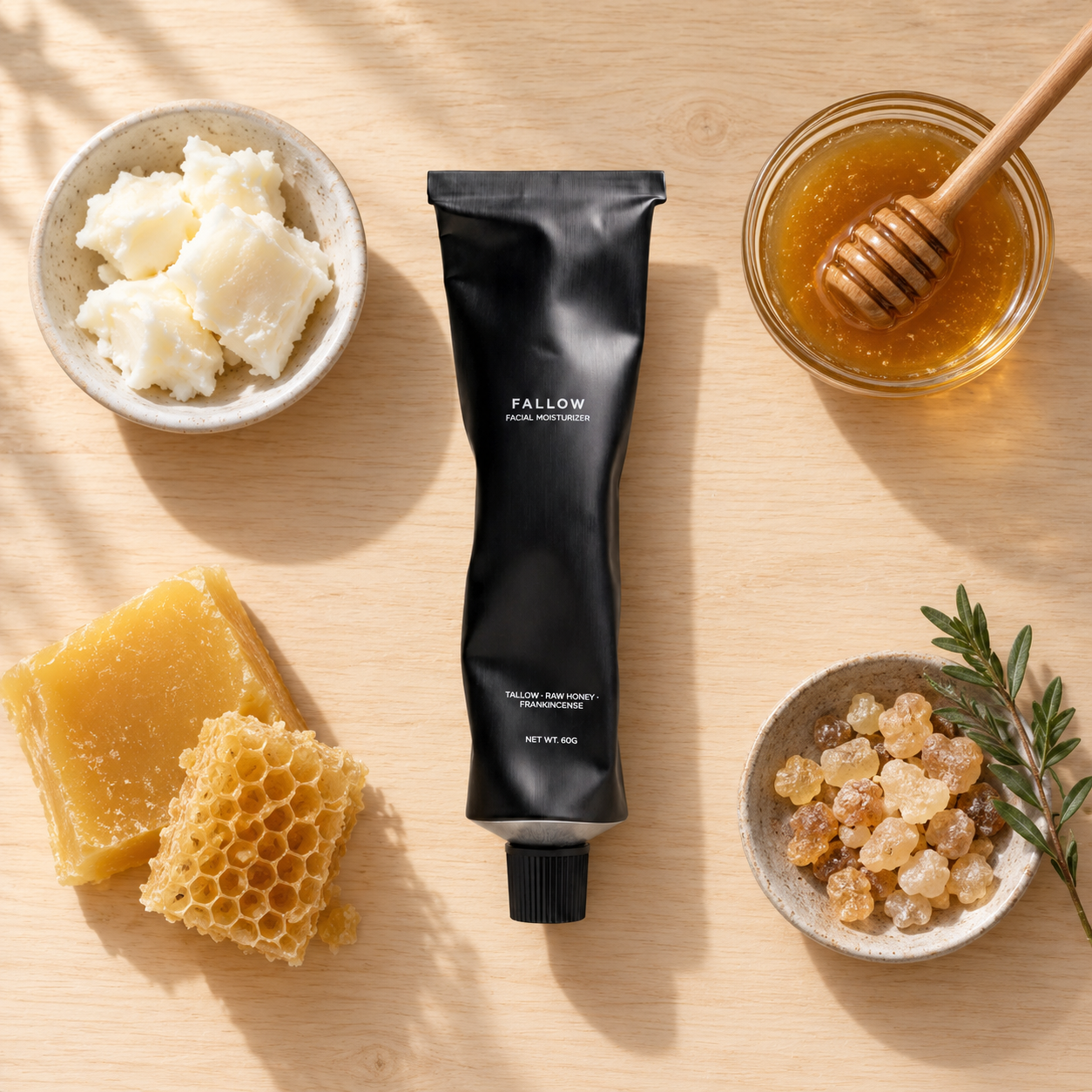
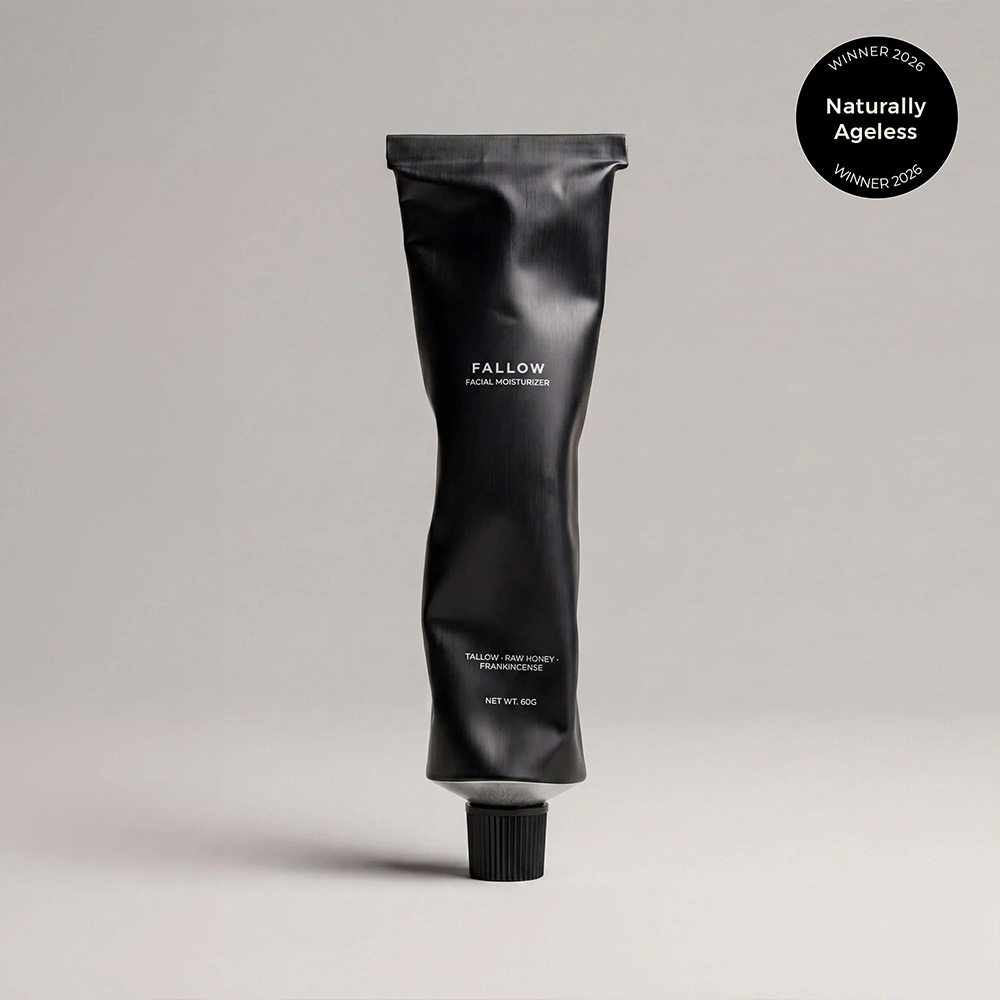
I bought the one that met all four of those and covered both jobs: Tallow Facial Moisturizer
- Grass-fed tallow — rebuilds the roof
- Beeswax — seals it
- Raw honey — helps the surface close
- Frankincense — goes after the elastase that already showed up
Two ounces.
Small batch, family-run.
Face, neck, and the backs of the hands you've been ignoring.
Thirty-day money back.
They sell out fairly regularly, which is annoying but is what small batch means.
Irena is still using the sour cream tub.
She thinks it's very funny that I pay for mine.
What to actually expect, tonight
The first night.
A pea, warmed between the fingers, pressed in rather than rubbed.
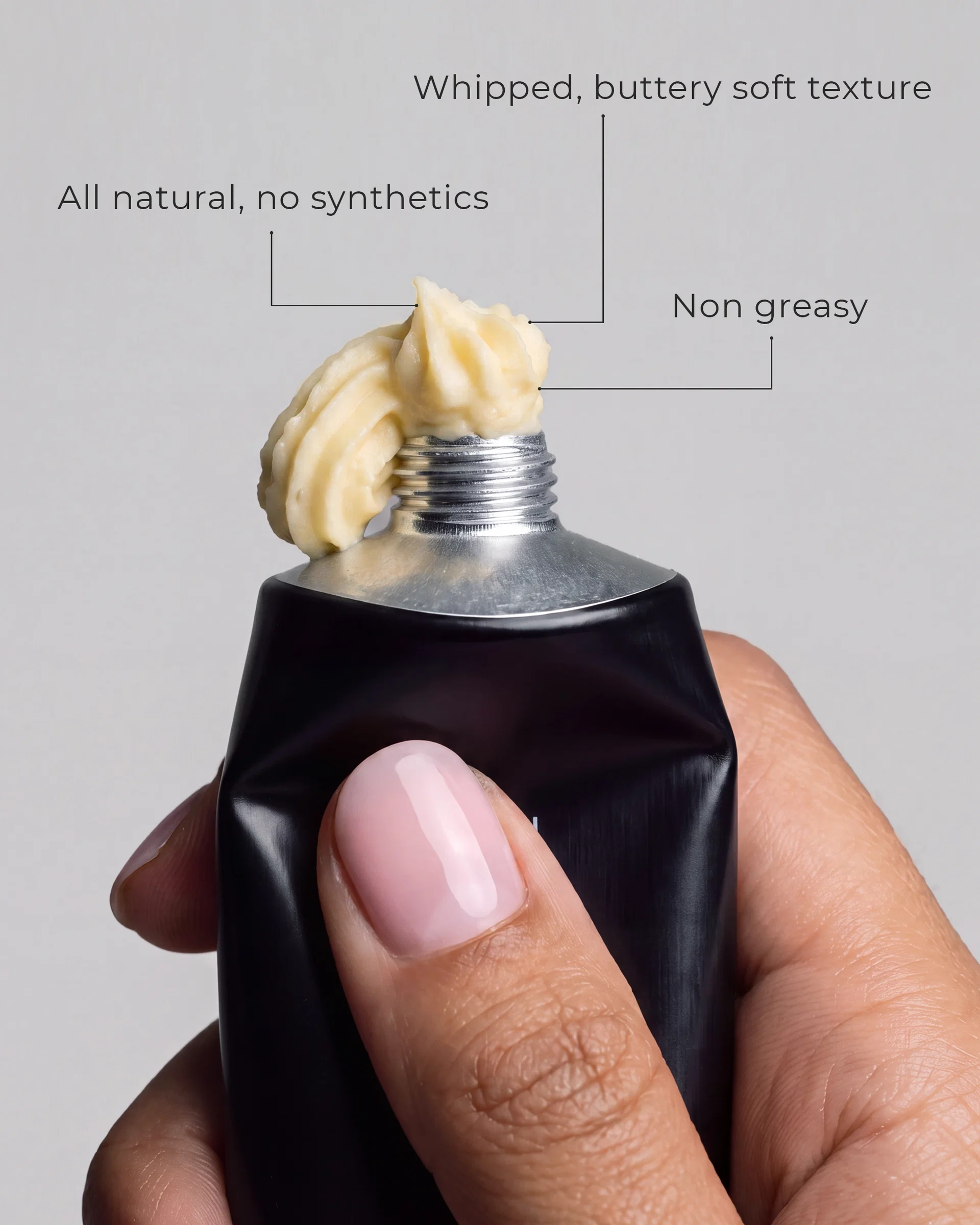
What surprised me was that it wasn't greasy at all.
I actually loved how it felt on my skin.
When I woke up my face didn't feel tight when.
That's the only thing I'd watch for at the start — not tingling.
Tingling means something is opening your barrier, not repairing it.
The first two weeks.
The tightness stopped coming back at all.
The flaking round my nose went.
My face stopped feeling like it needed something the second I'd finished putting something on it, which I hadn't known was a feeling until it stopped.
Makeup went on smoother — it stopped catching on dry patches, and it stopped settling into the line beside my mouth by lunchtime.
If you're still stripping the barrier with a retinoid every night, you're undoing this in the dark and it will show.
Weeks four to eight.
This is where it got interesting, and where the springs came into it.
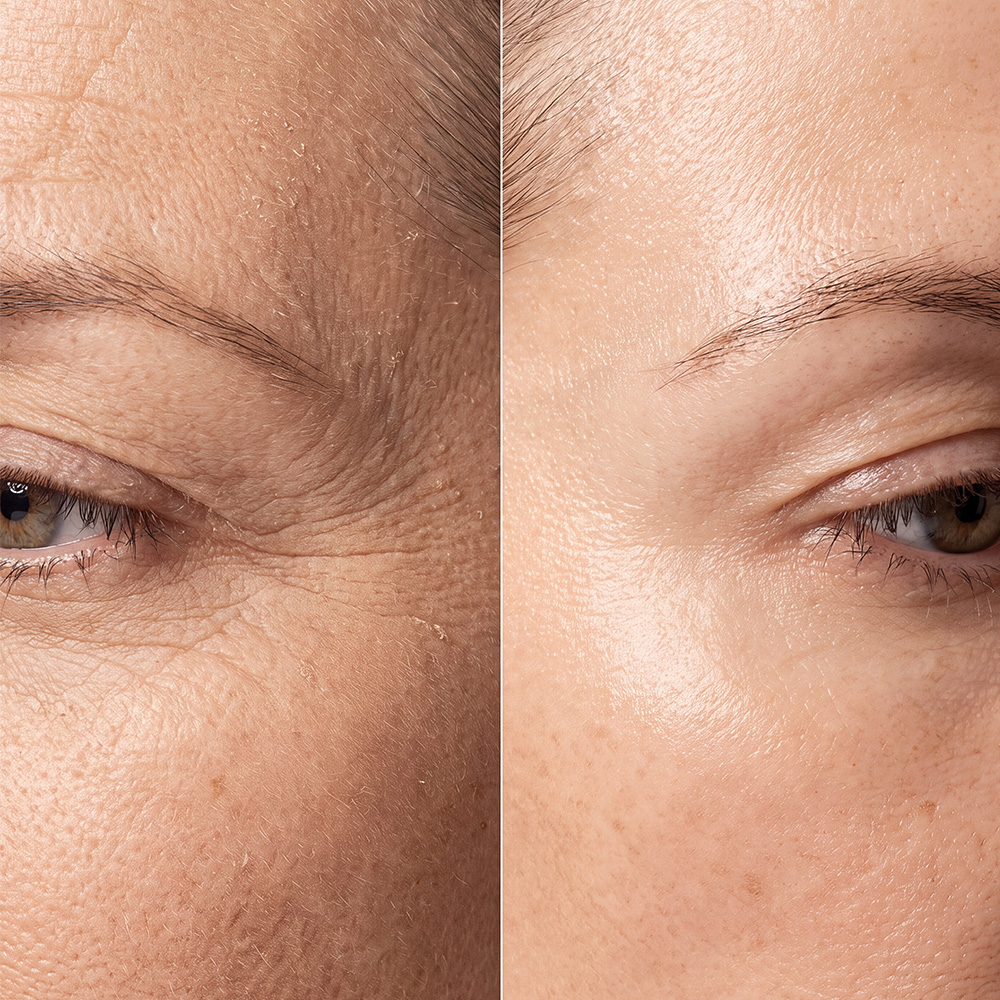
The fine lines at the corners of my eyes were shallower.
Not gone yet but noticeably weaker.
Fine lines start softening.
The "parentheses" around your mouth fade.
Friends start asking if you've "done something different."
My neck was the thing I hadn't expected.
I'd quietly stopped letting anyone photograph it from the side five years ago, and somewhere around July it was almost gone.
My husband never said one more word about my face after that afternoon with the albums.
Not for months.
Then some evening in August he looked over at me in the kitchen for a second longer than he needed to and said, "You look well."
I smiled and told him I felt it, too.
Three months and beyond:
Three months is when I smiled in the rearview and the lines at my eyes went away after the smile did.
That had not happened in years.
They used to stay cut in.
That is the spring.
Not a cream sitting on top of a crease.
The crease letting go.
Keep going and you are not "maintaining results."
You are refusing to invite the crew back in.
Every night you do not sand the barrier is a night elastin you cannot replace does not get cut.
That compounds.
A needle does not compound.
A needle expires.
By the autumn I'd told enough people that I'd started buying tubes as gifts.
My sister.
Two women from work.
My daughter's godmother, who's 61 and had an appointment booked for fillers that she cancelled.
They keep reporting back to me, which I hadn't expected at all.
It's usually one sentence:
"Six weeks in. My daughter asked what I'd changed."
— Diane R., Sacramento
"I bought it for my face. What I actually noticed first was the backs of my hands."
— Marguerite T., Tampa
"I have spent more than this on one bottle of serum that made me peel for a month."
— Anne-Marie K., Columbus
"My husband noticed before I did, which has never once happened."
— Robyn P., Boise
Now think about what the alternative costs you
I want you to do the arithmetic I did, because it's the part that made my decision for me.
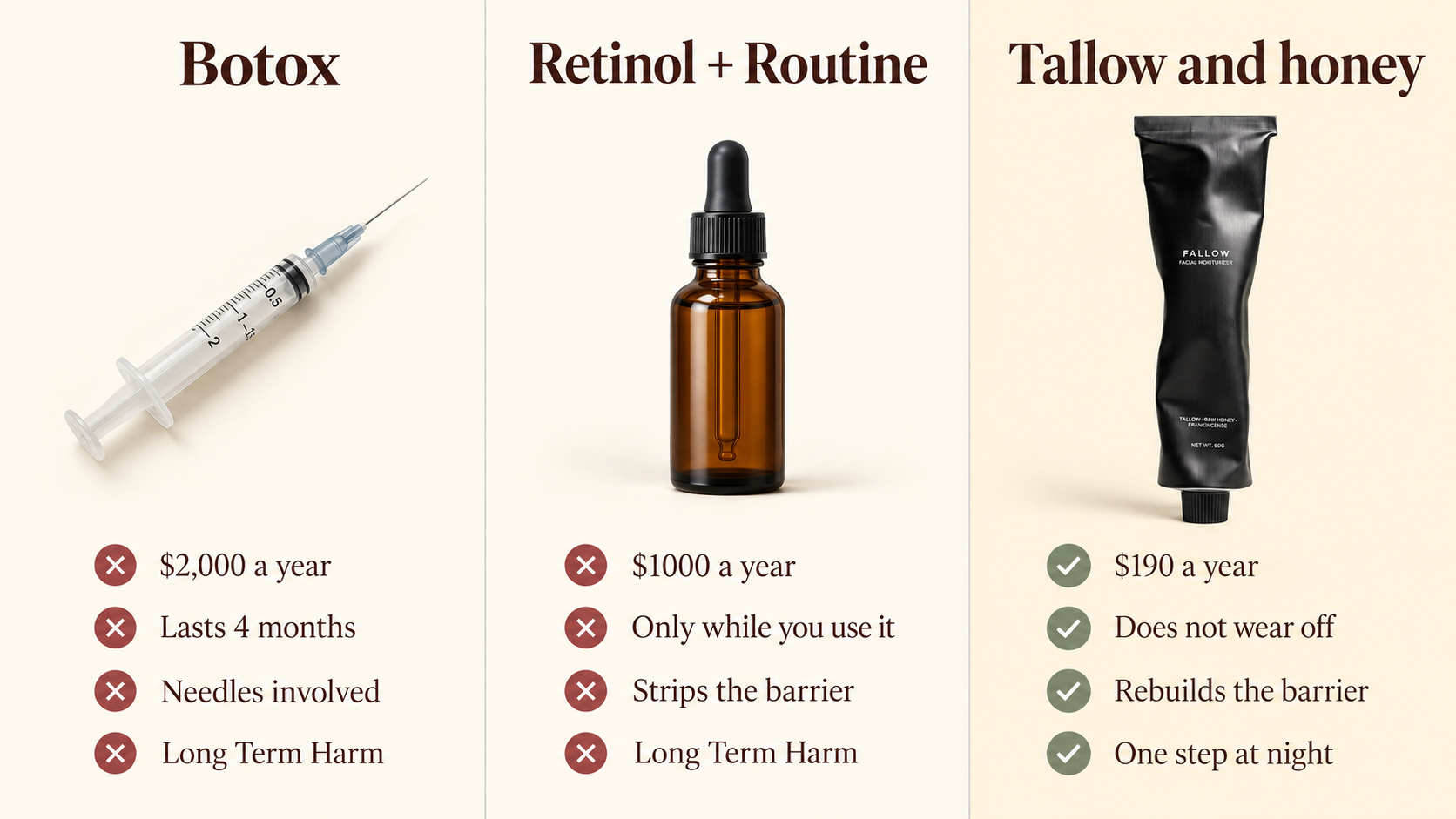
Botox is roughly three hundred a session, three or four sessions a year, for the rest of your life.
Call it a thousand a year.
It wears off by month four, it never touches the barrier, and you spend a decade renting the right not to fold a crease that's still sitting there the whole time.
The retinol you've already bought is forty or fifty pounds a bottle, several times a year, and my entire argument is that it has been quietly working against you.
This is a tube of fat, wax, honey and tree resin.
It costs less than one Botox appointment and it lasts months.
It is not a subscription.
Nobody is going to book you a follow-up.
And it's one step.
Once a day, at night.
Nothing to layer, nothing to time, no order to get wrong, no percentage to work your way up to.
You warm a pea of it between your fingers and press it in.
That's the entire routine, and there's no version of it you can do badly.
And notice which of those three is sold by a company with a marketing department.
There's a reason the aisle is full of things that need replacing, that need a stronger version next year, that need a professional to administer.
A cow, a hive and a tree don't have a patent between them and nobody's going to build a quarterly revenue forecast on a fat you can render on your own stove.
It's just what gets funded and what doesn't, and it's why a 79-year-old with a sour cream tub has better skin than an industry that's been selling to you since you were thirty-five.
So here's what I'd do tonight
Get a tube.
That's the entire decision.
Not a regimen, not a subscription, not a consultation and not a course of anything.
No needles.
No prescription.
No appointment.
No numbing cream.
No peeling phase.
No "purge" you're told to push through.
No four-month expiry date and no follow-up booking.
One tube takes you through the part that matters most, which is finding out whether your barrier actually closes.
That's the tightness going.
That's the flaking stopping.
That's your face no longer asking for something the moment you've finished giving it something.
Everything after that — the neck, the smile in the rearview mirror — is what a repaired barrier does on its own, without you doing anything else.
And use the whole thing.
Scrape it out.
Send back the empty tube inside thirty days and they'll refund you anyway.
Nobody ever repaired their skin with a balm they were rationing in case they wanted their money back.
So the money isn't the risk here.
Thirty days, empty tube, refunded, done.
The only thing you can lose is time — and time in this particular case is measured in elastin, which is the one thing on this entire page that nobody can refund you.
One last thing before you click: they run out.
This is a family rendering small batches, not a factory pouring something with a five-year shelf life.
When a run is gone it's gone until they render the next one.
If it's in stock right now, that's your answer.
Official site only.
Not the marketplace twins.
Tallow, beeswax, raw honey, frankincense.
39¢ for a two-ounce tube.
You were never inconsistent.
You were stripping the fats out of your own face and calling it a routine.
Put them back.
Go to bed.
Erase the look of aging skin without cosmetic surgery by obtaining a 30 DAY SUPPLY of all natural beef tallow.
40% Off The
Fallow Facial Moisturizer
This is the one I tell all my friends to buy. If it doesn't do for your skin what it did for theirs, send it back within 30 days.
Try Risk FreeSmall batches only — limited by how much grass-fed suet they can source. Current batch is running low.